

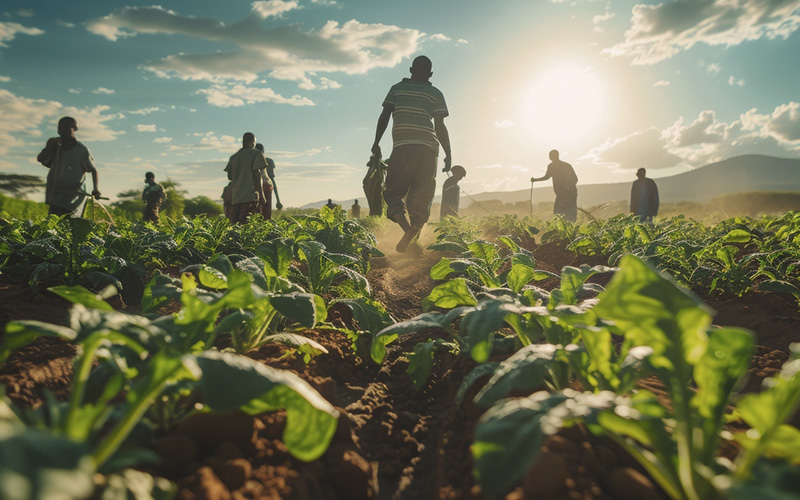
The challenges of sustainable agriculture are numerous and complex. Here are some of the most significant ones:
1- Climate Change: Climate change directly affects sustainable agriculture by altering precipitation patterns, increasing the frequency of extreme weather events, and modifying ecosystems.
2- Loss of Biodiversity: Biodiversity is crucial for maintaining healthy ecosystems, but intensive agriculture and monoculture practices have contributed to its decline.
3- Resource Limitations: The scarcity of natural resources, such as water and fertile land, is a major obstacle to sustainable agriculture.
4- Market Demand: Market demands often favor large-scale production and the use of unsustainable practices.
5- Access to Markets and Financial Resources: Many sustainable farmers face difficulties accessing markets and obtaining financing for sustainable practices.
These challenges require innovative solutions and a collective commitment to transform how we produce and consume food. Sustainable agriculture aims not only to minimize environmental impact but also to ensure food security and promote a fair and equitable economy.
Impact of Climate Change on Agriculture
Climate change significantly impacts agriculture in various ways:
Alteration of Crop Cycles: Changes in temperatures and rainfall patterns can alter crop cycles, affecting planting and harvesting.
Water Scarcity: Increased frequency and intensity of droughts and heatwaves lead to greater water scarcity, limiting this vital resource for agriculture.
Reduced Yields: Extreme temperatures and adverse weather conditions can reduce crop yields, affecting global food security.
Increase in Pests and Diseases: Climate change can favor the proliferation of pests and diseases that affect crops and livestock.
Soil Degradation: Erosion, desertification, and soil salinization are exacerbated by climate change, reducing the quality and quantity of land available for agriculture.
Greenhouse Gas Emissions: Agriculture also contributes to climate change through the emission of greenhouse gases such as methane and nitrous oxide.
To mitigate these impacts, it is crucial to adopt sustainable and climate-resilient agricultural practices, as well as policies that support climate adaptation and mitigation in the agricultural sector.
Strategies for Farmers to Adapt to Climate Change
Farmers can adapt to climate change through various sustainable strategies and practices:
Use of Resistant Crops: Cultivating plant varieties that are resistant to drought, salinity, and diseases.
Crop Diversification: Implementing crop diversification and agroforestry to reduce dependency on a single type of crop.
Smart Technologies: Adopting advanced technologies such as new irrigation methods and climate monitoring tools to optimize the use of water and other resources.
Soil Conservation Practices: Using minimal tillage techniques, cover crops, and crop rotation to improve soil health and water retention.
Integrated Pest Management: Applying integrated pest management to control diseases and pests more effectively and sustainably.
Resource Efficiency: Ensuring efficient agricultural operations, maximizing the use of basic inputs such as fertilizers.
Training and Education: Participating in training programs to learn about climate-resilient agricultural practices and how to implement them.
These measures not only help farmers adapt to changing conditions but also contribute to climate change mitigation by reducing greenhouse gas emissions and increasing carbon capture in agricultural ecosystems.